How to Choose the Best Liposuction Michigan Surgeon
@sethipnl209
October 21, 2026 · 15 min read

Choosing a surgeon for liposuction is not like choosing a spa, a gym, or even a general medical office. It is a decision with permanent aesthetic consequences, a real safety profile, and a recovery that depends as much on surgical judgment as it does on technical skill. People often start with photos, pricing, and online reviews. Those matter, but they do not tell the full story. The best liposuction outcome usually comes from a surgeon who combines restraint, planning, anatomical knowledge, and honest communication.
If Liposuction Michigan michellehardawaymd.com you are searching for a Liposuction Michigan specialist, it helps to know what separates a polished marketing presence from a truly qualified surgeon. Some practices are excellent at branding but average in execution. Others look understated online yet deliver consistently strong work because their process is disciplined from consultation through follow-up. The challenge is learning how to tell the difference before you commit.
Liposuction itself sounds straightforward because it is so familiar. Remove unwanted fat, contour the body, move on with life. In reality, body contouring is one of the most judgment-dependent procedures in cosmetic surgery. The surgeon has to decide not just how much fat to remove, but where to stop, where to feather, how to preserve natural transitions, whether the skin can retract well, and whether liposuction alone is even the right procedure. A less experienced surgeon can make a patient smaller but still leave them uneven, boxy, overdone, or disappointed.
Start with credentials, but do not stop there
The first filter should be nonnegotiable. You want a surgeon who is board certified in plastic surgery by the American Board of Plastic Surgery, or a facial plastic surgeon if the area being treated is limited and appropriate to that specialty. For body liposuction, board-certified plastic surgeons are the usual standard. That certification matters because it reflects formal surgical training, not just an interest in cosmetic procedures.
Patients sometimes get confused by impressive-sounding terms such as "cosmetic surgeon," "body sculpting expert," or "lipo specialist." Those phrases are marketing language. They do not all mean the surgeon completed the same level of accredited surgical training. A physician may legally offer cosmetic procedures with a very different educational background. That does not automatically make them unsafe, but it raises the burden on you to verify training, scope of practice, and experience.
Michigan has many reputable surgeons, particularly in and around metro Detroit, Ann Arbor, Grand Rapids, Troy, Birmingham, and other larger medical markets. When evaluating a Liposuction Michigan practice, look beyond the homepage. Read the surgeon's biography carefully. Check hospital privileges if applicable. See whether they perform liposuction regularly or whether it appears buried among a long menu of unrelated services.
Volume matters. A surgeon who performs body contouring every week develops pattern recognition that a lower-volume provider simply does not. They recognize which abdomen will tighten nicely and which needs a tummy tuck. They know how aggressively they can treat flanks without creating contour shadows. They anticipate where fibrosis can develop and how to minimize it. Repetition in this field is not boring. It is where judgment gets sharper.
Experience shows up in subtle ways
The best consultations often feel less like a sales pitch and more like a careful diagnostic conversation. An experienced surgeon will examine posture, skin tone, fat distribution, prior scars, weight stability, and the way one area affects another. For example, a patient focused on lower abdominal fullness may actually need contouring of the flanks to create a balanced result. Someone bothered by inner thighs may hear a cautious explanation that aggressive liposuction there can trade fullness for irregularity if the skin is lax.
That kind of nuance is a good sign.
Years ago, I sat in on consultations at a practice where two surgeons approached the same patient very differently. The patient wanted "full stomach lipo" and expected a dramatic change. One surgeon agreed immediately and quoted a package price. The other spent twenty minutes explaining that the patient had significant skin redundancy after weight loss, and that liposuction alone would likely worsen the hanging appearance. The second surgeon probably sounded less exciting in the room, but he was the one protecting the patient from a result that would have looked worse, not better. Good surgeons are willing to disappoint you in the short term if it means serving you well in the long term.
That is especially important in body contouring because the wrong indication cannot be fixed by a better bedside manner. A charming surgeon with weak judgment is still the wrong surgeon.
Before-and-after photos should teach you something
Photos are useful, but only if you know how to read them. Most patients look at whether the "after" image is attractive. A better approach is to study consistency, naturalness, and honesty.
Look for patients who resemble your body type. A surgeon may produce excellent results on lean women needing slight waist definition but only average work on larger-volume abdominal cases. If your concern is male chest and abdomen contouring, photos of hourglass shaping on petite women will not tell you much.
Pay attention to the following:
- Are the before-and-after photos taken with similar lighting, posture, and angles?
- Do the results look natural, or do they show grooves, dents, or sharp transitions?
- Is there a range of body types and ages, not just easy showcase cases?
- Can you see healed results several months out, not only early swelling changes?
- Do the treated areas look balanced with surrounding anatomy?
The strongest photo galleries show restraint. Smooth transitions around the waist, hips, back, and thighs often matter more than dramatic volume removal. Over-resection can look striking in a tightly posed image but strange in motion or everyday clothing. A beautiful liposuction result is often the one other people notice without knowing exactly why the body looks more proportional.
If a gallery feels too curated, too sparse, or too polished to evaluate, ask for more examples in consultation. Many surgeons have additional patient photos they can show privately. The way they discuss those photos can be just as revealing as the pictures themselves.
The consultation should feel specific, not scripted
A worthwhile consultation addresses your anatomy, your goals, your limitations, and your lifestyle. It should not sound like the same speech delivered to every patient.
The surgeon should explain what areas can be treated, what kind of contour change is realistic, where scars or entry sites are likely to be, what recovery actually feels like, and whether another procedure might serve you better. They should also talk about skin quality. This is the point many patients underestimate. Liposuction removes fat, but it does not remove loose skin. If the skin does not retract well, reducing the fat underneath can expose laxity more clearly.
In Michigan, where patients often schedule surgery around seasons, events, or time off work, practical recovery planning matters too. A surgeon who asks whether you have stairs at home, small children to lift, travel plans, or a physically demanding job is thinking responsibly. Winter surgery has conveniences, such as easier layering and less social pressure to be swimsuit-ready immediately. It also comes with slipping hazards on ice during early recovery and the challenge of moving around comfortably in compression garments under heavy clothing. A surgeon who thinks through these details usually runs a thoughtful practice overall.
A strong consultation also leaves room for "no." If every concern you raise is met with an instant yes, be cautious. The best surgeons set boundaries. They may tell you a second procedure is wiser than combining too much at once. They may decline to remove as much fat as you imagined because preserving contour smoothness and safety matters more than chasing a number on the scale.
Ask where the procedure will be done
The setting matters more than many people realize. Liposuction may be performed in an accredited office-based surgical suite, an ambulatory surgery center, or a hospital. The key issue is not only comfort or convenience, but whether the facility is properly accredited and equipped for the level of procedure being offered.
A well-run surgical setting should have trained staff, sterile protocols, emergency equipment, appropriate monitoring, and clear anesthesia standards. Ask who will administer anesthesia and what credentials they hold. For some limited cases under local anesthesia, the setup may be straightforward. For larger-volume liposuction or multiple treatment areas, you want a team that handles these cases routinely and safely.
Do not be shy about asking direct questions. A reputable surgeon expects them.
Price matters, but cheap liposuction can get expensive fast
Patients naturally compare quotes, and they should. Liposuction is elective surgery, and financial planning is part of the decision. Still, price should be interpreted carefully.
A lower fee may reflect efficiency or lower overhead. It may also reflect limited experience, shorter follow-up, a less qualified team, or a tendency to underquote and add fees later. A higher fee does not guarantee excellence either, but in established cosmetic markets, very low pricing often deserves extra scrutiny.
When reviewing costs, make sure you understand what is included. Ask whether the quote covers surgeon fees, anesthesia, facility costs, compression garments, postoperative visits, and any expected revision policy. Some practices quote one area at an attractive base rate, but the final number rises quickly once contouring is expanded to achieve a balanced result.
Revision surgery is where bargain decisions become expensive. Correcting contour irregularities, asymmetry, or over-resection is often more difficult than doing the first surgery well. Secondary liposuction can involve scar tissue, less forgiving tissue planes, and lower patient tolerance for another imperfect result. Paying for skill up front is usually cheaper than paying for repair.
Reviews help, but patterns matter more than star ratings
Online reviews can offer clues, especially about office organization, scheduling, billing transparency, and how patients feel treated. They are less reliable as a technical measure of surgical excellence. Happy reviews can come from patients who are still early in healing. Negative reviews can reflect unrealistic expectations rather than poor care. What matters is the pattern.
Look for repeated comments about whether the surgeon listened, whether recovery instructions were clear, whether follow-up was accessible, and whether concerns were handled seriously. If multiple patients mention rushed consultations, surprise charges, poor communication after surgery, or pressure to book quickly, pay attention.
The opposite pattern is reassuring. When patients independently mention that the surgeon was honest about limitations, available during recovery, and unwilling to oversell, that usually reflects a healthy practice culture.
Specialization within liposuction is real
Not every surgeon approaches liposuction the same way. Some emphasize high-definition contouring. Others focus on classic debulking and silhouette improvement. Some are particularly strong in post-pregnancy abdomen and flanks. Others do excellent work on neck liposuction, arms, gynecomastia, or revision cases.
You do not need the trendiest method. You need the right surgeon for your anatomy and your goals.
Technology can distract from this point. Patients often come in asking for a branded technique because the name sounds advanced. Yet the cannula, the energy device, or the marketing term is rarely the main determinant of outcome. Surgeon judgment, tissue handling, and artistic planning matter far more than whether the office promotes one machine over another. There are situations where ultrasound-assisted, laser-assisted, power-assisted, or other modalities may be useful, but none of them rescue poor technique.
A seasoned surgeon can usually explain why they prefer a particular method in plain language. If the answer sounds like a brochure rather than a clinical rationale, keep asking questions.
Recovery support tells you a lot about the practice
Many patients focus heavily on the operation itself and not enough on the recovery system around it. That system can shape both safety and satisfaction.
You want a practice that gives detailed written instructions, realistic timelines, and easy access if problems arise. Swelling, drainage, bruising, temporary numbness, firmness, and asymmetry during healing can all be normal, but patients need context. Without it, they panic, call repeatedly, or assume the result has failed before tissues have settled.
One of the clearest signs of a mature practice is how calmly and specifically the staff handles postoperative questions. They should know when to reassure, when to bring you in, and when to escalate to the surgeon. Offices that disappear after collecting payment are a poor fit for elective surgery.
Compression guidance, activity progression, scar care for access sites, hydration, walking, and return-to-work timing all deserve concrete discussion. If you are evaluating a Liposuction Michigan surgeon, ask what the first week looks like in practical terms. Can you shower the next day? When do they want to see you? Who answers after-hours concerns? Those details are not glamorous, but they are where patient experience either feels supported or abandoned.
Red flags worth taking seriously
Sometimes the wrong surgeon reveals themselves quickly. More often, the signs are subtle and patients talk themselves out of noticing them because they like the office, the social media account, or the price.
Be careful if you encounter any of these:
- Pressure to book immediately or take advantage of a same-day discount
- Vague answers about board certification, anesthesia, or facility accreditation
- Guarantees of perfection or claims that recovery is easy for everyone
- Photo galleries that hide angles, lighting, or long-term healing
- Dismissive responses to questions about complications or revisions
A surgeon does not need to be warm and chatty to be excellent, but they do need to be clear, transparent, and grounded in reality. Cosmetic surgery is one of the few consumer experiences where discomfort during the consultation can actually be protective. If the surgeon gives you an answer you did not want to hear, that may be exactly why they are trustworthy.
Geography, travel, and follow-up in Michigan
Patients sometimes assume they need to travel far for the best care. Sometimes they do, especially for very complex revision work. Often they do not. Michigan has enough experienced plastic surgeons that many patients can find excellent care within a reasonable drive.
There are advantages to staying local or at least regional. Follow-up is easier. Managing drains, swelling checks, or small concerns becomes less stressful. If you need an unscheduled visit, you are not trying to coordinate flights or long drives while sore and compressed. Weather also matters more in Michigan than in many states. Snow, ice, and long winter commutes can complicate both surgery day and early postoperative appointments. Practicality should be part of your decision.
That said, do not choose the closest surgeon by default. Choose the best surgeon you can realistically follow up with. A one- to three-hour drive for the right fit is often reasonable. A local surgeon who feels mediocre is not automatically preferable to a stronger surgeon a bit farther away.
Match your goals to the right personality and philosophy
Some patients want Liposuction Michigan visible sculpting. Others want to look like themselves, just more balanced in clothing. Some are willing to accept a longer recovery for more aggressive contour change. Others want a modest improvement with minimal disruption. A good surgeon hears the difference.
This is where personality fit matters. Not because you need a new friend, but because cosmetic surgery requires precise communication. If you say "natural," what do you mean? If you say "snatched," what do you mean? Two people can use the same word and picture very different outcomes.
The best consultations spend time translating subjective aesthetic language into surgical terms. The surgeon may mark your body and explain where projection is coming from, where shadows will deepen if overtreated, and why preserving some fullness in one area may make the result look more elegant overall. This kind of communication reduces disappointment because it aligns expectation with anatomy.
I have seen patients choose a technically solid surgeon and still end up underwhelmed because their desired look and the surgeon's style were mismatched. The surgeon favored conservative refinement. The patient wanted a more athletic, etched contour. Neither was wrong, but the fit was off. When reviewing photos and speaking with a surgeon, try to sense their aesthetic signature. It is usually there.
How to make the final decision
By the time you narrow your options, the decision should feel less like a popularity contest and more like a professional judgment call. Ask yourself which surgeon was the most honest, the most specific, and the most consistent with your goals. Ask who made you feel informed rather than persuaded.
If two surgeons seem similarly qualified, small details can help break the tie. Which office ran on time and answered questions clearly? Which surgeon noticed nuances in your anatomy without being prompted? Which one spoke thoughtfully about limitations? Who had outcomes that looked like what you actually want, not just what photographs well online?
Trust is not blind confidence. It is confidence with evidence behind it.
The right Liposuction Michigan surgeon is not simply the one with the flashiest branding or the largest social following. It is the one whose training is verifiable, whose results are consistent, whose judgment is mature, and whose process respects both safety and aesthetics. If you approach the decision that way, you greatly improve your odds of ending up with something every patient hopes for, a result that looks natural, heals smoothly, and still feels like the right choice years later.
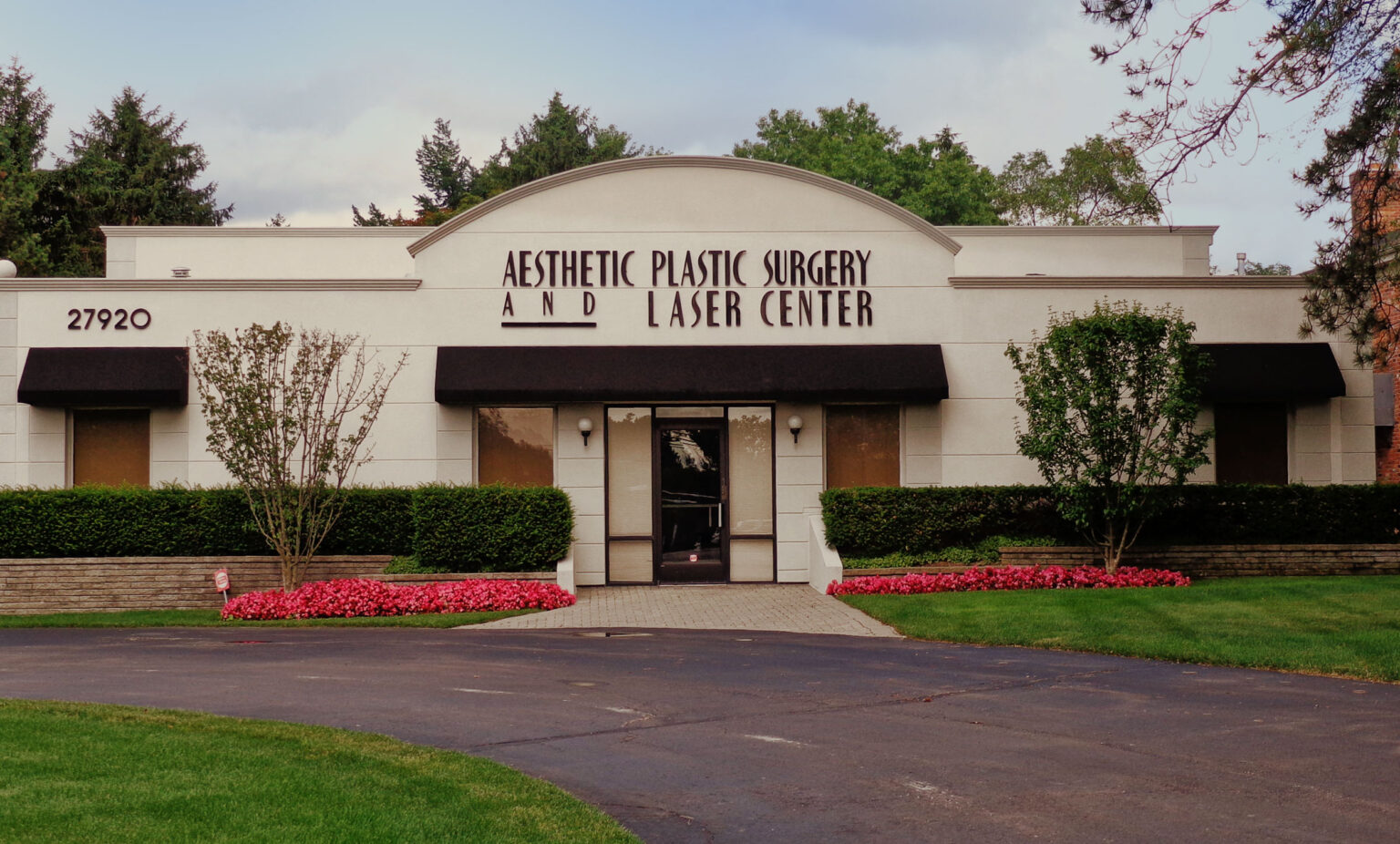
Aesthetic Plastic Surgery & Laser Center, Michelle Hardaway M.D.
27920 Orchard Lake Rd, Farmington Hills, MI 48334, United States
+1 248-221-1957
FAQ About Liposuction Michigan
Is 55 too old for liposuction?
Age 55 alone does not determine suitability. A surgeon evaluates overall health, skin quality, healing risks, and realistic goals. A personal consultation is needed to assess candidacy and discuss alternatives.
What happens 10 years after liposuction?
Contour improvements can last, especially with stable weight. Aging, pregnancy, and weight changes can alter the appearance over time. Results vary, and liposuction does not prevent future body changes.
Can lipo get rid of an apron belly?
Liposuction reduces localized fat but does not remove hanging excess skin. An apron belly may require assessment for a skin-removal procedure instead of, or alongside, fat removal. A qualified plastic surgeon can explain appropriate options and their risks.